The Biggest AI Automation Mistake Small Businesses Make (It Has Nothing to Do With AI)
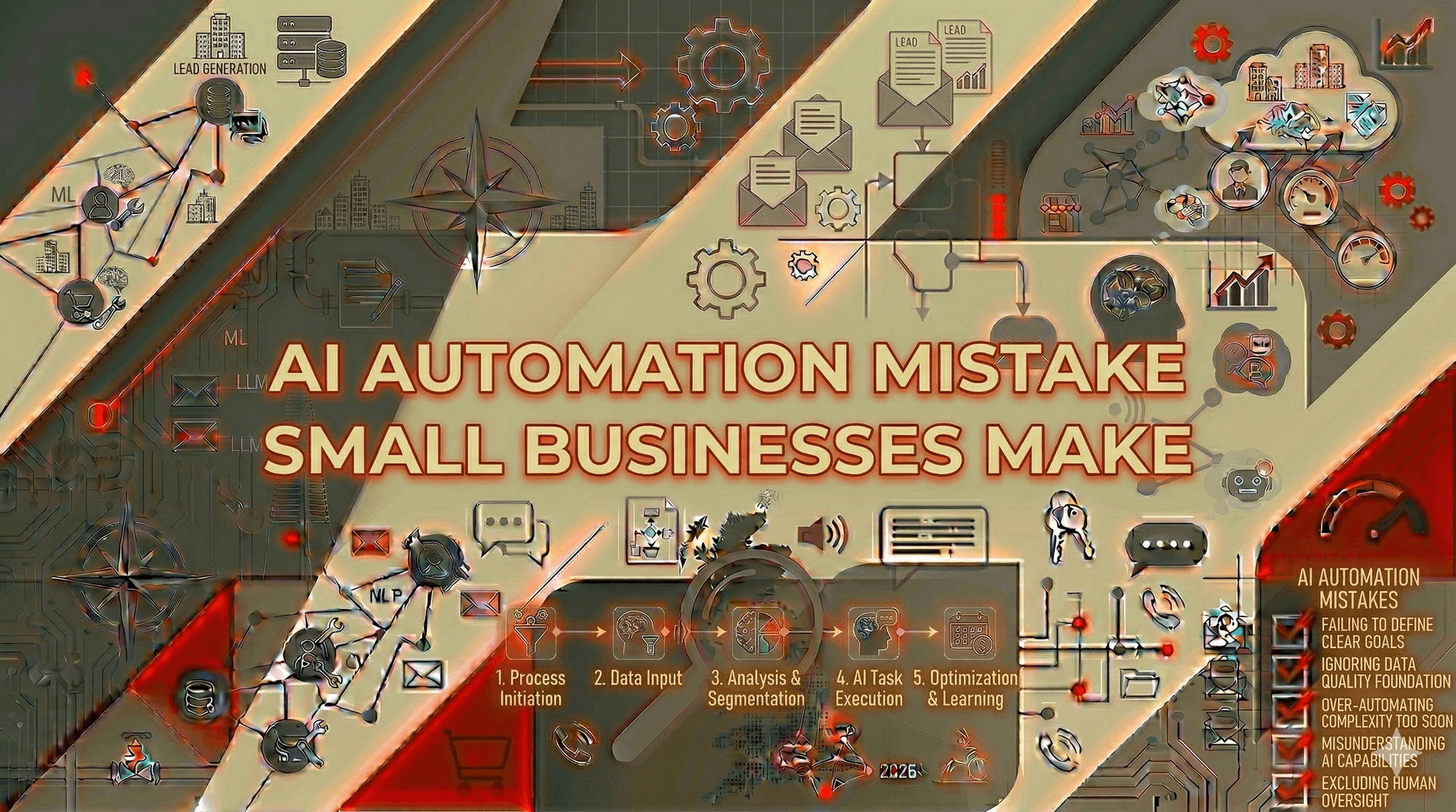
Most small business owners assume the hard part of AI adoption is choosing the right tool. It isn't. The hard part is realising that the tool will ruthlessly expose every broken process, inconsistent spreadsheet, and undocumented workaround you've been getting away with for years.
We put this question to business leaders who've been through it: What's the one challenge you didn't see coming when you introduced AI automation? Their answers were surprisingly consistent. And none of them blamed the technology.
AI doesn't create chaos. It amplifies it.
If your current workflow involves three people who each do the same task slightly differently, an AI tool won't quietly pick the best version. It will do all three, badly, and generate a fourth variation nobody asked for.
Edith Forestal, a cybersecurity specialist who runs her own education platform, learned this firsthand:
"AI amplified existing process chaos when we introduced it without clear workflows. I stopped the tool-first approach, mapped the core workflows, and inserted AI into specific stages tied to our primary bottleneck. My advice to others is to start with your bottleneck, make AI part of repeatable workflows, and always apply a human filter to protect your brand voice."
Edith Forestal, Founder & Cybersecurity Specialist, Forestal Security
What she's describing is something I see constantly when working with small businesses. The instinct is to find an AI tool and throw it at the problem. But the problem often isn't that the work takes too long. The problem is that nobody has written down how the work actually gets done.
Glenn Orloff, who runs a shuttle transportation business, hit the same wall from a different angle. His AI wasn't underperforming. It was performing exactly as instructed, with bad instructions:
"The issue lay with quality and consistency of the data which fed it. We first cleaned up all of the inputs into the AI, established clear rules around edge cases, and kept some level of human review as part of the initial roll out. Every small business should fix their processes prior to automating them. AI can enhance the effectiveness of execution, but it will typically expose any weaknesses in your existing processes."
Glenn Orloff, CEO, Metropolitan Shuttle
Think of it like hiring a new employee. If you hand a new starter a task with no documentation, no templates, and three different people giving them contradictory instructions, you'd expect problems. AI is no different. It needs defined inputs, clear rules, and someone checking the output until you trust it.
I set up a tenant communication workflow for a letting agent last year. Before we touched any AI tool, we spent two hours writing down exactly how they wanted different types of tenant queries handled: maintenance requests, late rent chasers, renewal notices, complaints. That documentation didn't exist before. Everyone "just knew" how to do it. Except they all did it differently, and 20% of tenant emails were getting lost in the cracks. The AI didn't fix that problem. Writing the process down fixed the problem. The AI just made the fixed process faster.
Don't automate ten things. Automate one.
There's a specific type of failure that happens when a business gets excited about AI. Someone (usually the owner) watches a YouTube video over the weekend, arrives Monday morning with a list of fifteen things to automate, and tries to roll them all out in the same week.
The result is predictable. Staff get confused. Nobody can agree on what "working" looks like. And within a month, the whole initiative gets quietly shelved because it "didn't work."
Kyle Barnholt, co-founder of Trewup, lived through exactly this:
"A wide rollout created confusion and many different opinions about what success should look like. We then focused on one simple workflow that was repeated often and easy to measure. This reduced risk and helped us see clear results quickly. The change improved team confidence because everyone could see real progress in their daily work. We also added regular check points so feedback could guide our work early. Small steps worked better and built steady trust in AI use across the team."
Kyle Barnholt, CEO & Co-founder, Trewup
The bit that stands out to me: "many different opinions about what success should look like." That's the killer. If your office manager thinks success means fewer emails, your operations lead thinks it means faster responses, and you think it means lower headcount, you've got three people measuring three different things. Of course it looks like a failure to at least two of them.
Pick one workflow. The most repetitive, most measurable, most annoying task in your week. For a letting agent, that's usually tenant reference replies or maintenance acknowledgement emails. For an accountant, it might be bank reconciliation queries. For a builder, it's writing up quotes.
Automate that one thing. Measure it. Let people see it working before you move on. When we run AI assessments, the first thing we identify is a "quick win," a single workflow that can be automated within a day and saves at least an hour a week. That single win does more for team buy-in than any amount of enthusiasm from the boss.
AI adoption isn't a project. It's a new way of working.
Here's where most advice about AI falls short. It treats adoption like a project with a start and end date. Install the tool. Configure the workflow. Done.
But the tools change. The capabilities change. What was a limitation six months ago might now be a solved problem. And what worked six months ago might now have a better, cheaper alternative.
Dawn McGrath runs marketing at an industrial lubricants company and found that keeping up with AI's rate of change was the real challenge:
"One unexpected challenge was keeping up with how quickly the AI tools and best practices changed, and then getting that new learning to translate into consistent, everyday workflows for the team. We overcame it by investing in professional development and deliberately folding what we learned into our daily applications so the tools supported the work instead of distracting from it. My advice is to treat AI adoption as an operating change, not a one-time tool purchase: start with a strong content foundation, set a simple routine for ongoing learning, and build a human review step so automation strengthens trust rather than putting it at risk."
Dawn McGrath, Marketing Director, Keller Heartt
That phrase, "an operating change, not a one-time tool purchase," is exactly right. I'd add a practical dimension to it: set aside 30 minutes every fortnight to check what's changed in the tools you use. Most small businesses won't do this, which is why the ones that do pull ahead quickly.
A property management client of ours set up an AI-assisted system for drafting landlord reports in late 2024. By early 2025, the same AI tool had added the ability to pull data directly from their accounting software, cutting out a manual copy-paste step that took about 15 minutes per report. They only discovered this because someone actually read the product update email instead of deleting it. Fifteen reports a month, fifteen minutes each: that's nearly four hours back, for free, just from reading a changelog.
What actually matters before you start
So what do you do with all this? Every person we spoke to, whether they were running cybersecurity training, shuttle logistics, or industrial marketing, came back to the same three things:
Document before you automate. Write down how the task is currently done, step by step. If different team members do it differently, decide on one version. The AI needs a single, clear process to follow. This is the work nobody wants to do, and it's the work that makes everything else possible.
Pick one workflow and prove it works. Don't get ambitious. Find the most repetitive task that's easy to measure. Automate it. Let it run for two weeks with human review. When the team sees it working, they'll ask what's next. That's the signal to expand, not before.
Build a review habit. Check your AI outputs weekly until you trust them. Check the tools you're using monthly for updates. AI adoption that stalls usually stalls because nobody maintained it, not because the technology failed.
If you've been putting off AI because you're not sure where to start, start with a pen and paper. Map out your week. Find the task you do most often that looks roughly the same every time. That's your candidate. Write down exactly how you do it. That document is worth more than any AI tool you'll ever buy, because it's what makes the tool actually work.
We help small businesses in property management, accounting, and trades find and automate the workflows that eat their week. Our AI assessment identifies where you're losing time, recommends specific tools, and guarantees 5+ hours saved per week or your money back. Book a discovery call to see if it's right for your business.